
Digital marketing has become one of the most important ways for businesses to reach customers online. From small local shops to large international companies, businesses use digital platforms to promote their products, connect with their audience, and increase sales.
But what is digital marketing, and how does it work?
In simple words, digital marketing is the process of promoting products, services, or brands through the internet and other digital channels. It includes search engines, social media, websites, email, online advertisements, and other digital platforms.
In this beginner-friendly guide, you will learn how digital marketing works, its main types, its benefits, and how you can start learning digital marketing step by step.
Example of Digital Marketing

Suppose you own a small clothing shop in anywhere. You create an Instagram page to showcase your new collection and set up a website where customers can view your products. Additionally, you write helpful blog posts to attract people who are searching for clothing online. All these activities are examples of digital marketing, as you are using digital platforms to promote your business and reach potential customers.
Table of Contents
What Is Digital Marketing?
Digital marketing is a form of marketing that uses online platforms and digital technologies to promote a business, product, or service.
For example, when a company publishes an Instagram post to promote a product, runs an advertisement on Google, or sends promotional emails to customers, it is using digital marketing.
Traditional marketing often relies on methods such as newspaper advertisements, billboards, and printed flyers. Digital marketing allows businesses to reach people through digital channels and measure how audiences respond to their campaigns.
Businesses can use digital marketing to:
- Increase brand awareness.
- Reach potential customers online.
- Generate leads and sales.
- Build relationships with customers.
- Promote products and services.
- Measure marketing performance.
Digital marketing can be useful for almost any business, including online stores, educational institutions, freelancers, service providers, and local shops.
How Does Digital Marketing Work?
Digital marketing works by connecting a business with people who may be interested in its products or services.
The process usually begins with understanding the target audience. A business then chooses suitable digital platforms, creates useful or promotional content, and encourages people to take action.
Here is a simple example.
Imagine that you own an online store selling mobile accessories. You can create a website to display your products, publish helpful videos on Instagram, improve your website’s visibility on Google, and run paid advertisements to reach potential buyers.
When people discover your products, they may visit your website, compare prices, ask questions, and eventually make a purchase.
A basic digital marketing process includes:
- Identify your audience: Understand who your potential customers are.
- Choose digital channels: Select platforms such as Google, Instagram, YouTube, or email.
- Create useful content: Publish information that helps or interests your audience.
- Attract visitors: Use search engine optimization, social media, or paid advertising.
- Convert visitors: Encourage people to subscribe, contact your business, or purchase a product.
- Measure results: Review website traffic, engagement, leads, and sales to improve your strategy.
The exact process depends on the business, its audience, and its marketing goals.
7 Main Types of Digital Marketing
Digital marketing includes several methods. Each method has a different purpose, and businesses often combine multiple methods to achieve better results.
1. Search Engine Optimization (SEO)
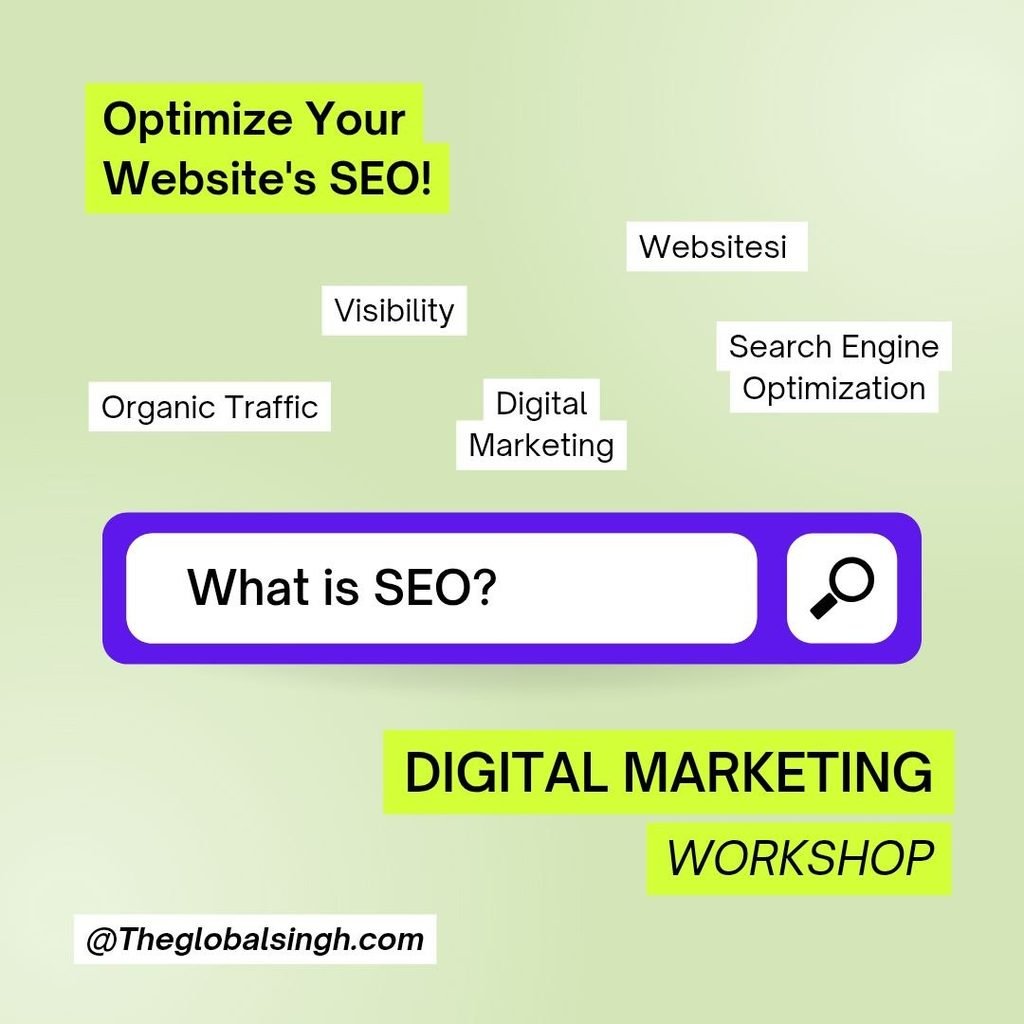
Search engine optimization, commonly called SEO, is the process of improving a website so that its pages can appear more prominently in relevant search engine results.
For example, if someone searches for “best budget smartphones,” a website with useful, relevant content may appear in the results.
SEO generally includes three major areas:
- On-page SEO: Improving page titles, headings, content, images, and internal links.
- Off-page SEO: Building credibility through relevant mentions, links, and other external signals.
- Technical SEO: Helping search engines crawl, understand, and index a website.
SEO can attract visitors who are actively searching for information, products, or services. However, rankings take time and are never guaranteed.
Example of Seo

Suppose you publish a blog post about the “best budget smartphones in India.” If your article provides useful information, answers readers' questions, and follows good SEO practices, it may appear in relevant Google search results. This can help people discover your website, and you won’t have to pay for each click. However, there is no guarantee regarding search rankings.
2. Social Media Marketing
Social media marketing involves using platforms such as Instagram, Facebook, LinkedIn, TikTok, and YouTube to communicate with an audience and promote a brand.
Businesses can share short videos, images, educational posts, customer stories, product demonstrations, and other content.
For example, a clothing brand may post outfit ideas on Instagram, answer customer questions through comments, and collaborate with relevant creators to introduce its products to new audiences.
Social media marketing can help businesses build brand awareness, develop customer relationships, and bring visitors to their websites.
Example of Social Media Marketing

Suppose a local salon wants to attract more customers. It posts content on Instagram, such as videos of hairstyle transformations, short clips on hair care, customer reviews, and updates about its services. People who find this content useful can visit the salon’s profile, inquire about pricing, and book an appointment. In this way, social media marketing can help a local business connect with potential customers.
3. Content Marketing
Content marketing focuses on creating and sharing useful, relevant content to attract and retain a specific audience.
Common examples include:
- Blog articles.
- Educational videos.
- Tutorials and guides.
- Infographics.
- E-books.
- Podcasts.
For example, a company selling fitness equipment could publish articles about home workouts and videos explaining how to use its products safely.
Good content helps answer customers’ questions and builds trust. Instead of only promoting a product, content marketing provides information that people can use.
4. Email Marketing
Email marketing involves sending messages to people who have chosen to receive updates from a business.
Companies use email to share newsletters, product updates, educational information, special offers, and important announcements.
For example, an online store may send a welcome email to new subscribers and later share information about new arrivals.
Email marketing allows businesses to communicate directly with subscribers. To use it responsibly, businesses should follow applicable privacy rules and provide a clear way to unsubscribe from marketing emails.
5. Pay-Per-Click Advertising (PPC)
Pay-per-click advertising is a digital advertising model in which advertisers generally pay when someone clicks on their advertisement.
Google Ads is one example of a platform used for PPC campaigns. Advertisers can also run campaigns on social media platforms, although their charging models may vary.
For example, a coaching institute may advertise its courses to people searching for relevant classes in a particular city.
PPC can help businesses reach potential customers quickly, but results depend on factors such as targeting, competition, advertising costs, landing-page quality, and the offer itself.
6. Affiliate Marketing
Affiliate marketing is a method in which a person or business earns a commission by promoting another company’s products or services under an affiliate arrangement.
An affiliate may share a special tracking link through a blog, website, YouTube channel, or social media page.
If someone makes a qualifying purchase through that link, the affiliate may receive a commission according to the program’s terms.
For example, a technology blogger may review headphones and include affiliate links for readers who want to purchase them.
Affiliate marketers should clearly disclose their financial relationships and follow the relevant platform rules and advertising requirements.
Example of Affiliate Marketing

Suppose you run a technology blog where you review headphones, smartphones, and laptops. You join a suitable affiliate program and include affiliate links in your product reviews (which you also disclose to your audience). If a reader purchases a product through your link, you can earn a commission, in accordance with the terms of the affiliate program. Your earnings depend on the actual purchase made and the specific terms of the affiliate program.
7. Influencer Marketing
Influencer marketing involves working with content creators who have an audience interested in a particular topic or niche.
A brand may pay a creator or provide products in exchange for an agreed promotional activity.
For example, a skincare company might collaborate with a beauty creator to demonstrate how its products are used.
A large audience does not automatically mean better results. Businesses should consider the creator’s audience relevance, engagement quality, credibility, and campaign goals before choosing a partner.
Example: Earning through freelancing

For instance, a beginner could learn how to manage Instagram pages and create sample posts to build a portfolio. Following this, they could reach out to local businesses—such as salons, gyms, or clothing stores—and offer social media management services. If a business decides to hire them, they can earn money by creating content and managing the account. Finding clients requires effort, and there is no guarantee of earnings.
What Are the Benefits of Digital Marketing?
Digital marketing offers several advantages compared with relying only on traditional promotional methods.
1. Reach a Larger Audience
A website or social media account can help a business connect with people beyond its immediate geographical area. Depending on the business model, it may reach customers across a city, country, or multiple countries.
2. Target Relevant Customers
Many digital advertising platforms offer targeting options based on factors such as location, interests, or user behaviour, subject to platform policies and privacy restrictions.
This can help businesses present relevant offers to suitable audiences.
3. Start With a Small Budget
Some digital marketing activities, such as publishing blog posts or creating organic social media content, can be started with little money.
Paid advertising requires a budget, but campaigns can often be tested with controlled spending before a business invests more.
Free marketing does not mean effortless marketing. Content creation, research, testing, and consistency still require time.
4. Measure Campaign Performance
Digital marketing tools can help businesses monitor website visits, clicks, engagement, leads, purchases, and other performance indicators.
These measurements allow marketers to identify what is working and where improvements may be needed.
5. Build Customer Relationships
Businesses can communicate with customers through social media, email, useful content, and customer support channels.
Regular, helpful communication can encourage trust and long-term relationships.
6. Improve Marketing Strategies Over Time
Digital campaigns can be tested and adjusted based on performance. A business might experiment with different headlines, images, audiences, or landing pages to discover which approach works better.
Results vary, so it is important to measure actual performance rather than assume that every campaign will succeed.
What Are the Disadvantages of Digital Marketing?
Although digital marketing has many benefits, it also comes with challenges.
- High competition: Many businesses compete for the same audiences and search terms.
- Changing platforms: Search engines and social media platforms regularly update their systems and policies.
- Time and effort: Producing useful content and building an audience can take consistent work.
- Advertising costs: Paid campaigns can waste money if targeting, offers, or landing pages are poorly planned.
- Privacy concerns: Businesses must handle customer data responsibly and comply with applicable laws.
- Uncertain results: More followers, clicks, or website visits do not always lead to more sales.
Understanding these challenges can help businesses set realistic goals and create a more sustainable marketing strategy.
Digital Marketing vs Traditional Marketing
Both digital and traditional marketing can help businesses promote products and services. The main difference is the channels they use.
| Digital Marketing | Traditional Marketing |
|---|---|
| Uses websites, search engines, email, and social media | Uses newspapers, billboards, radio, and printed materials |
| Can provide detailed online performance data | Measurement may rely on surveys, estimates, or other methods |
| Can reach audiences across different locations | Often works well for local or broad offline exposure |
| Campaigns can often be adjusted quickly | Some campaigns require more time to change |
| May begin with a small budget | Costs vary depending on the medium and campaign |
Neither approach is automatically better for every business. The right choice depends on the target audience, marketing objective, budget, and product or service.
What Is a Digital Marketing Strategy?
A digital marketing strategy is a plan that explains how a business will use digital channels to achieve its marketing goals.
Without a clear strategy, a business may spend time posting content or running advertisements without understanding whether those activities are producing useful results.
A practical strategy includes the following steps:
Step 1: Set Clear Goals
Decide what you want to achieve. Your goal might be to increase website traffic, generate enquiries, sell products, or build brand awareness.
Make the goal specific and measurable wherever possible.
Step 2: Understand Your Target Audience
Research your audience’s needs, interests, common problems, preferred platforms, and purchasing behaviour.
The better you understand potential customers, the easier it becomes to create relevant messages.
Step 3: Choose the Right Channels
You do not need to use every platform at once.
A blog may benefit from SEO and content marketing. A local service business might focus on local search visibility and social media. An online store may combine SEO, email marketing, and paid advertising.
Choose channels based on your audience and goals.
Step 4: Create Valuable Content
Develop content that answers questions, solves problems, demonstrates products, or explains services.
Use clear language and make sure your content offers genuine value rather than repeating promotional messages.
Step 5: Track Your Results
Use relevant analytics tools to measure performance. Depending on your goal, track metrics such as organic traffic, engagement, click-through rate, leads, conversion rate, or sales.
Step 6: Improve Your Approach
Review the data regularly. Keep activities that are producing useful results, test improvements, and stop spending time or money on approaches that consistently fail to meet your objectives.
How to Start Learning Digital Marketing as a Beginner
If you want to learn digital marketing, you do not need to master every skill at the same time. Start with the basics and build practical experience.
Here is a simple learning roadmap.
Week 1: Understand the Basics
Learn what digital marketing is and how SEO, social media marketing, content marketing, email marketing, and paid advertising work.
Choose one type of digital marketing that interests you most.
Week 2: Learn Content Creation and SEO
Practise writing a blog article, creating social media posts, researching keywords, and improving page titles and headings.
If you have a website, use it as a practice project.
Week 3: Practise With Digital Platforms
Explore relevant tools such as Google Search Console, Google Analytics, Canva, and social media analytics.
Some tools and features may require an account or have eligibility requirements. Start with the free features available to you.
Week 4: Build a Small Project
Create a sample marketing campaign for a real or imaginary business. For example, prepare a seven-day social media content plan or optimise a blog post for a specific search query.
Record what you did, why you did it, and how you would measure its performance.
After the first month, continue practising and choose a more specialised skill to develop.
Can You Earn Money Through Digital Marketing?
Yes, digital marketing can provide different ways to earn money, but income is not guaranteed. It depends on your skills, experience, ability to find clients or customers, and the value you deliver.
Some possible opportunities include:
- Freelancing: Provide services such as SEO, content writing, social media management, or advertising support.
- Affiliate marketing: Earn commissions by promoting products through eligible affiliate programs.
- Blogging: Build a website and explore suitable monetisation options when you have an audience.
- YouTube content: Create useful videos and explore eligible monetisation methods.
- Digital products: Sell e-books, templates, courses, or other digital resources.
- Agency services: Manage marketing activities for businesses after developing the necessary skills and experience.
If you are a beginner, focus first on learning one practical skill and building a portfolio. You can practise with your own website or create sample projects before approaching potential clients.
Avoid anyone promising guaranteed income or instant results from digital marketing.
Common Digital Marketing Mistakes to Avoid
Beginners often make a few mistakes that slow their progress.
- Trying to learn every marketing skill at once.
- Publishing content without understanding the target audience.
- Expecting immediate results from SEO.
- Spending on advertisements without setting a clear goal.
- Ignoring analytics and performance data.
- Copying competitors instead of developing useful, original content.
- Focusing only on followers and likes instead of meaningful business results.
- Using misleading claims or failing to disclose paid promotions and affiliate relationships.
A better approach is to start with a clear goal, practise consistently, and use real results to improve your decisions.
Frequently Asked Questions About Digital Marketing
1. What is digital marketing in simple words?
Digital marketing means promoting a business, product, or service using digital channels such as websites, search engines, social media, email, and online advertisements.
2. What are the 7 main types of digital marketing?
Seven common types are search engine optimization, social media marketing, content marketing, email marketing, pay-per-click advertising, affiliate marketing, and influencer marketing.
3. Is digital marketing easy to learn?
The basics can be learned by beginners, but developing professional skills takes practice. Starting with one area and working on real projects can make learning easier.
4. Can I learn digital marketing for free?
Yes. You can use free articles, tutorials, learning resources, and available versions of marketing tools to understand the basics. Some advanced courses, tools, and advertising activities may require payment.
5. How long does it take to learn digital marketing?
You can learn basic concepts in a few weeks, but becoming confident at a professional level may take several months or longer. The time depends on the skill, practice, and experience you gain.
6. Which digital marketing skill is best for beginners?
SEO, content writing, social media management, and basic design are possible starting points. Choose a skill that matches your interests and practise it through small projects.
7. Does digital marketing require coding?
Most digital marketing roles do not require advanced coding. However, basic HTML, website knowledge, and technical skills can be useful for certain SEO, analytics, and website-related tasks.
8. What is the difference between SEO and digital marketing?
Digital marketing is the broader field of promoting products and services through digital channels. SEO is one part of digital marketing that focuses on improving a website’s visibility in relevant search results.
Conclusion
Digital marketing is an important way for businesses to reach people online, share useful information, promote their products, and build customer relationships.
It includes different methods, such as SEO, social media marketing, content marketing, email marketing, paid advertising, affiliate marketing, and influencer marketing. Each method has its own strengths, and the right approach depends on the business and its goals.
If you are a beginner, start by understanding the fundamentals, choose one skill, and practise through a small project. Focus on creating genuine value for your audience and measuring your results.
With consistent learning and practical experience, you can develop digital marketing skills that are useful for your own website, a business, or a future freelancing career.