

lovelyrai0099@gmail.comEdit Profile
In the digital realm, where websites and applications serve as primary mediums for accessing information and services, a digital theme plays a crucial role in shaping user experience and brand identity. Essentially, a digital theme is a pre-designed template that provides a consistent visual style for your website or application. It incorporates various elements—such as colors, fonts, layouts, and overall design aesthetics—to create a cohesive and visually appealing user interface.
Table of Contents
what is a digital theme?
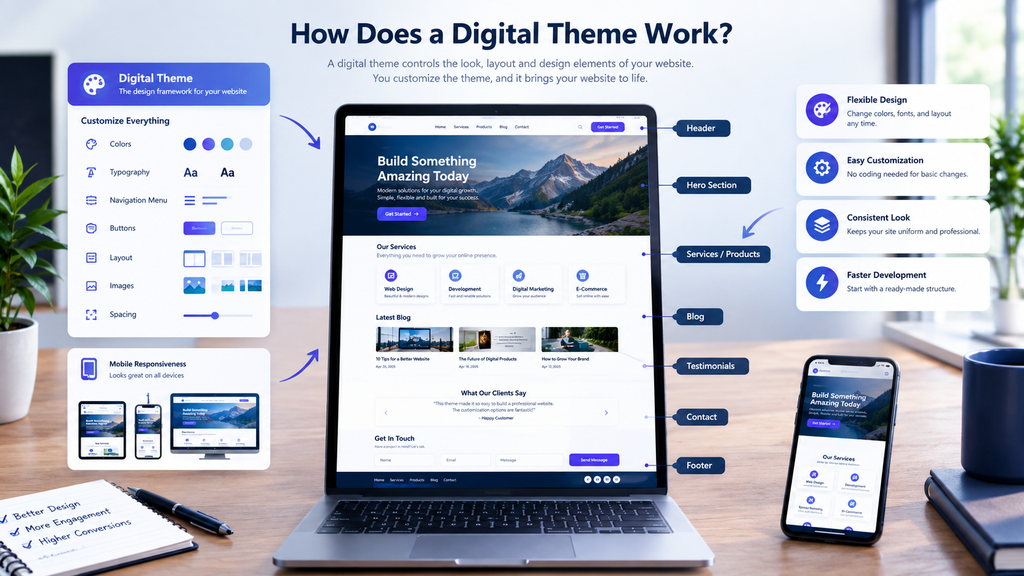
Simply put, a digital theme is a collection of designs and interface elements that gives a digital platform a distinctive look, structure, and visual style.

For example, a technology company's website might use a modern dark theme with bold typography, whereas a fashion website might employ a clean layout featuring large product images.

In this guide, you will learn what a digital theme is, how it works, where it is used, and how to choose the right theme for your website.
Why are digital themes important?
The key topics of digital marketing include the following four areas:
Google AdWords – Google AdWords can be a crucial part of your multi-channel marketing campaigns. You can use this tool to create online advertising campaigns that deliver outstanding results for your business. Since Google is the world’s most popular search engine, it serves as a means to reach your target market quickly and effectively. By adopting a robust Google AdWords strategy, you can connect with audiences across Google Maps, YouTube, search result pages, and Google Play.
With the help of Google AdWords, you can automate various digital marketing strategies. For instance, you can tailor your ad campaigns to align with your business goals. Do you want to generate more phone calls? Drive more traffic to your website? Attract more visitors to your physical store? You can create campaigns in various ways and target your advertising strategy to achieve the specific results you desire.
You can use Google AdWords in conjunction with Google Analytics to launch campaigns and measure results. This allows you to focus on running your business, as your digital marketing campaign continues to operate automatically. By periodically checking the dashboard, you can identify which ads are performing best and adjust your strategy accordingly. This way, you can maximize the impact of high-performing elements while also addressing any issues that require attention.
also known as ‘Cost Per Click’ (CPC) or ‘Pay Per Click’ (PPC)
Search Engine Optimization (SEO)– SEO (Search Engine Optimization) is the process of optimizing websites and digital content with the aim of increasing visibility, traffic, and brand credibility across search engines and AI-driven search platforms. It encompasses technical optimization, content strategy, link building, and ensuring the brand is accurately represented wherever people and AI systems seek information.
Effective SEO requires understanding user search intent, targeting the right keywords, and establishing a robust technical foundation. When executed correctly, SEO drives targeted traffic, attracts potential customers, and strengthens brand awareness, ultimately leading to an increase in leads, sales, and revenue.
Social Media Marketing (SMM)- SEO (Search Engine Optimization) is the process of optimizing websites and digital content with the aim of increasing visibility, traffic, and brand credibility across search engines and AI-driven search platforms. It encompasses technical optimization, content strategy, link building, and ensuring the brand is accurately represented wherever people and AI systems seek information.
Effective SEO requires understanding user search intent, targeting the right keywords, and establishing a robust technical foundation. When executed correctly, SEO drives targeted traffic, attracts potential customers, and strengthens brand awareness, ultimately leading to an increase in leads, sales, and revenue.
Email Marketing – Email marketing is used to promote products or services and enhance customer loyalty. It is a form of digital marketing that allows you to inform customers on your email list about new products, discounts, and other services.
Email marketing is highly effective due to its extensive reach. People worldwide send and receive approximately 392 billion emails daily, and this figure is projected to reach 424 billion by 2028. Checking email has become a daily habit for most people, making the inbox an excellent place to connect with your audience.
How Does a Digital Theme Work?
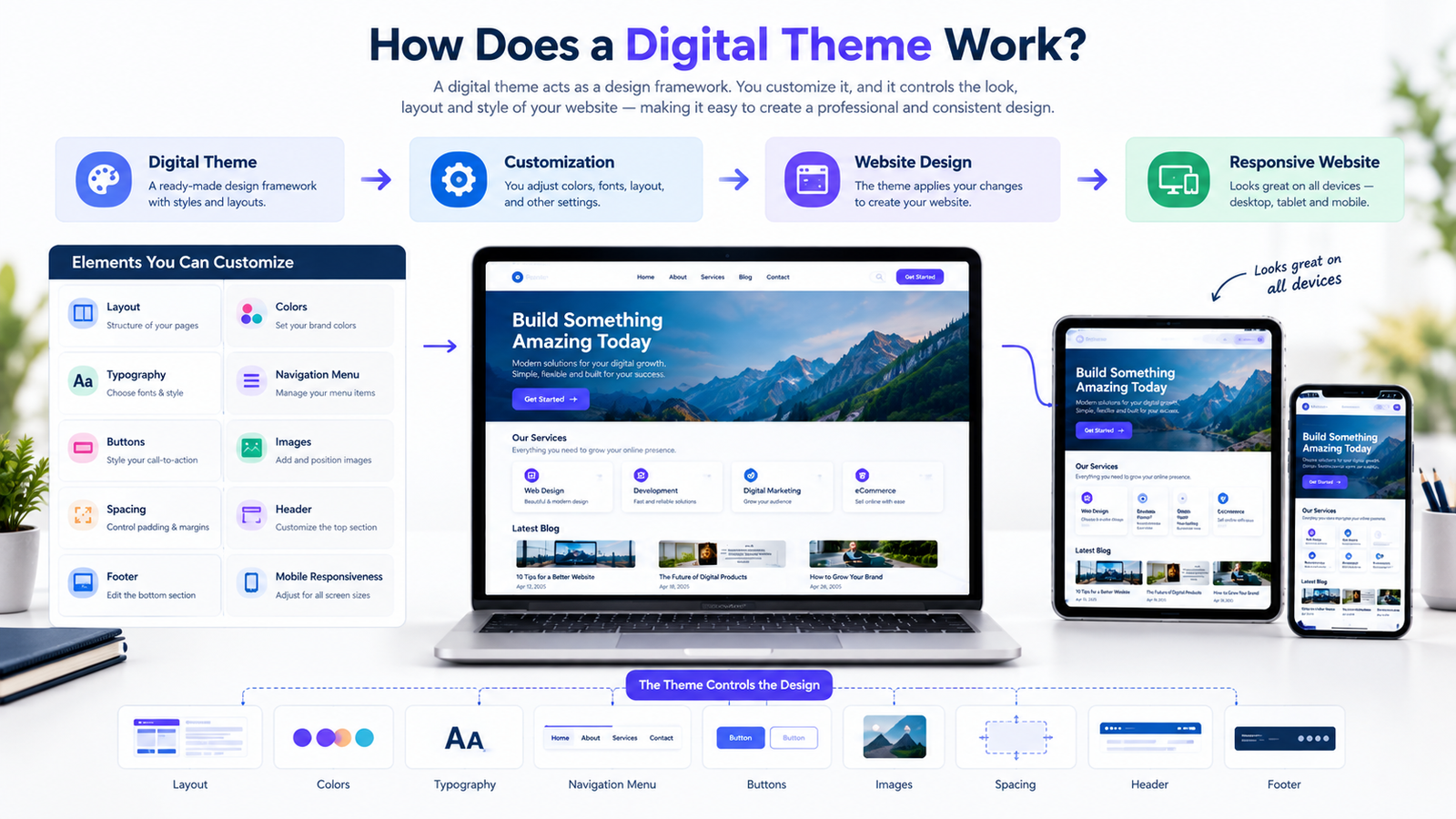
Think of a theme as a design framework for a website.
Instead of designing every page from scratch, you can start with a theme and customize it to suit your needs.
For example, suppose you are building a digital marketing website.
A theme might already include elements like:
Header → Hero section → Services → Blog → Testimonials → Contact → Footer
You can then modify colors, text, images, fonts, and other settings to align with your brand.
This can save a significant amount of time on design and development.
However, a theme does not constitute your website’s content; your articles, products, images, branding, and business information are generally separate from the theme.
What Elements Are Included in a Digital Theme?
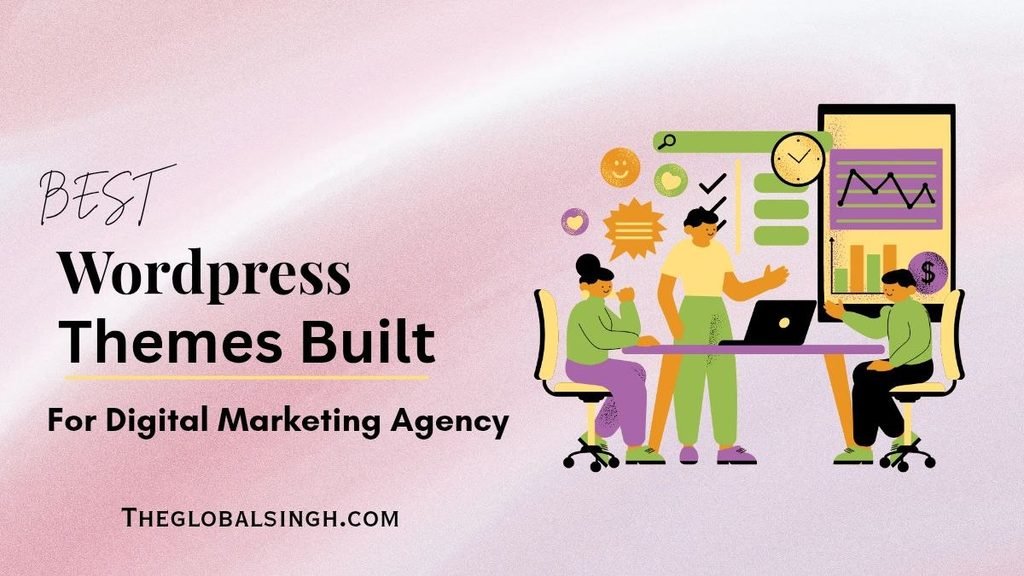
Different themes include different features, but several elements are common.
1. Layout
The layout determines how information is arranged on a page.
For example, a blog theme might have:
- Main content area
- Sidebar
- Featured posts
- Categories
- Related articles
An ecommerce theme may instead focus on:
- Shopping sections
- Product categories
- Product grids
- Featured products
- Promotional banners
2. Colors
Colors help establish a website’s visual identity. A technology website might use bright accent colors against a dark background, whereas a wellness website might use lighter colors. A good theme typically allows you to customize at least a few colors.
3. Typography
Typography refers to fonts, sizes, weights, spacing, and other design choices related to text. Good typography makes a website easier to read and helps establish a visual hierarchy among headings, paragraphs, buttons, and other elements.
4. Navigation
Navigation helps visitors move around your website.
A theme may provide menus for pages such as:
- Home
- About
- Blog
- Services
- Products
- Contact
On mobile devices, the navigation may change into a menu or drawer to make better use of the smaller screen.
5. Buttons and User Interface Elements
Themes can also determine the appearance of buttons, forms, cards, icons, product listings, and other interface components.
For example:
Read more
Learn more
Buy now
Contact us
These elements should be easy to understand and visually consistent.
Digital Theme vs Website Template
These two terms are often misunderstood.
A theme generally refers to a comprehensive design system that can control the appearance of multiple pages and components.
A template is often a specific page or layout that can serve as a starting point for a particular type of content.
For example, a website theme can include multiple templates.
- Blog post
- Page
- Product page
- Category page
- Contact page
- The exact meaning may vary depending on the website builder or platform.
What Is a Digital Theme Used For?
Digital themes are used on various types of websites and digital platforms.
Blogs
Blog themes can emphasize making articles easy to read, as well as categories, featured images, author information, and related posts.
Business Websites
Business themes may include sections for services, company information, testimonials, team members, and contact details.
Ecommerce Stores
E-commerce themes are designed with products, categories, shopping experiences, and promotional sections in mind.
Portfolio Websites
Designers, photographers, developers, and other professionals can use portfolio themes to showcase their work.
Digital Product Stores
Some themes are specifically designed for businesses that sell digital goods such as e-books, courses, software, downloadable files, and subscriptions. For instance, certain e-commerce platforms offer digital-product themes featuring capabilities tailored to digital goods.
What Is a Digital Theme for an Online Store?
If you sell digital products, a theme can make your online store look more professional and easier to use.
Imagine that you sell:
- E-books
- Templates
- Software
- Music
- Digital artwork
A suitable e-commerce theme can organize these products into categories and showcase them through product cards, promotional sections, and dedicated product pages. Some themes are specifically designed for digital products that do not require physical shipping. This can enhance the shopping experience for digital goods.
Benefits of Using a Digital Theme
Saves Time
You don’t have to design every component from scratch.
Creates a Consistent Look
A theme can keep the appearance of your fonts, colors, buttons, spacing, and layout consistent.
Easier Customization
Many modern website platforms offer visual customization tools that allow beginners to modify key design elements without writing code.
Better Starting Point
Instead of starting with a completely blank website, you can begin with a pre-existing structure and modify it.
Mobile-Friendly Design
Many modern themes are designed to adapt to different screen sizes. However, you should always test your website on phones and tablets rather than assuming the theme will look perfect everywhere.
How to Choose the Right Digital Theme
Do not choose a theme solely based on how attractive its demo looks.
Consider these points.
1. Match the Theme to Your Website
Blogs, online stores, portfolios, and business websites may require different layouts. Choose a theme that aligns with the purpose of your website.
2. Check Mobile Responsiveness
A large portion of web browsing happens on mobile devices.
Check how the theme looks on:
Desktop screens
Smartphones
Tablets
Laptops
3. Look at Customization Options
Check if you can modify these:
Colors
Fonts
Logo
Menu
Header
Footer
Page layout
Buttons
4. Check Performance
Even a visually stunning theme is of no use if it unnecessarily slows down your website.
Avoid using themes that include features you do not actually need.
5. Check Updates and Support
Using a theme that receives regular updates and has easily accessible documentation or support can make managing the website easier.
6. Consider SEO
A website does not rank high in search engines based on the theme alone.
Your content, technical setup, site structure, performance, internal linking, and various other factors also matter.
Choose a theme with a clean structure that does not cause unnecessary technical issues.
Free vs Paid Digital Themes
Both free and paid themes can be useful.
Free Themes
Free themes can be a good starting point for beginners who want to learn website creation without spending much money.
They may provide enough features for a simple blog or basic website
Paid Themes
Paid themes may offer additional layouts, customization options, support, integrations, and premium features.
However, simply purchasing a premium theme does not automatically make a website successful.
The right choice depends on your needs and budget.
Common Mistakes When Choosing a Theme
Choosing a Theme Only Because It Looks Beautiful
A theme might look fantastic in the demo but not be suitable for your actual content.
Installing Too Many Features
Managing the website can become difficult due to extra features, and this can also impact performance.
Ignoring Mobile Design
Always check your website on a real smartphone.
Changing Themes Too Frequently
Constantly changing themes can lead to unnecessary design and configuration work.
Choose a suitable base and customize it gradually.
Copying Another Website’s Design
You can study successful websites for inspiration, but your own website should have its own branding, content, and visual identity.
Is a Digital Theme the Same as a Digital Product?
No. A digital theme is typically a design system or website theme used to control the look and structure of a digital platform. A digital product is something that is sold or delivered digitally, such as: E-books Courses Templates Software Music Digital artwork For example, a WordPress theme itself can be sold as a digital product. Therefore, while these two concepts may be related, they are not the same thing.
Can You Create Your Own Digital Theme?
Yes.
If you know web development, you can build a theme from scratch.
Depending on the platform, this may involve the following technologies:
- HTML
- CSS
- Java
- PHP
- Script Theme-specific frameworks or APIs
Even beginners with no coding knowledge can use website builders or theme customization tools to modify an existing theme.
Creating your own theme gives you more control, but it also entails more development and maintenance work.
Frequently Asked Questions
What is a digital theme?
A digital theme is a collection of design and interface elements that determines the visual appearance and structure of a website or digital platform.
What is a digital theme used for?
It can be used to control layouts, colors, typography, navigation, buttons, product displays, and other visual components of a digital website or store.
Can beginners use digital themes?
Yes. Many website platforms offer theme systems that allow even those without advanced coding skills to easily make customizations.
Are digital themes free?
Some themes are free, while others require payment. Different themes offer varying features and customization options.
Can I sell a digital theme?
Yes. If you create website themes and hold the necessary rights to all the elements used in them, they can be sold as digital products.
Which theme is best for a website?
There is no single theme that is best for every website. The right choice depends on your website’s purpose, content, design requirements, performance needs, and budget.
Conclusion
Digital themes are essential tools for creating visually appealing and functional websites and applications. By carefully assessing your needs, exploring various options, and selecting a theme that aligns with your goals, you can build a remarkable online presence that engages your audience and delivers the desired results. Remember, choosing the right theme is about more than just aesthetics; the aim is to provide a seamless and enjoyable user experience that leaves a lasting impression on your visitors.